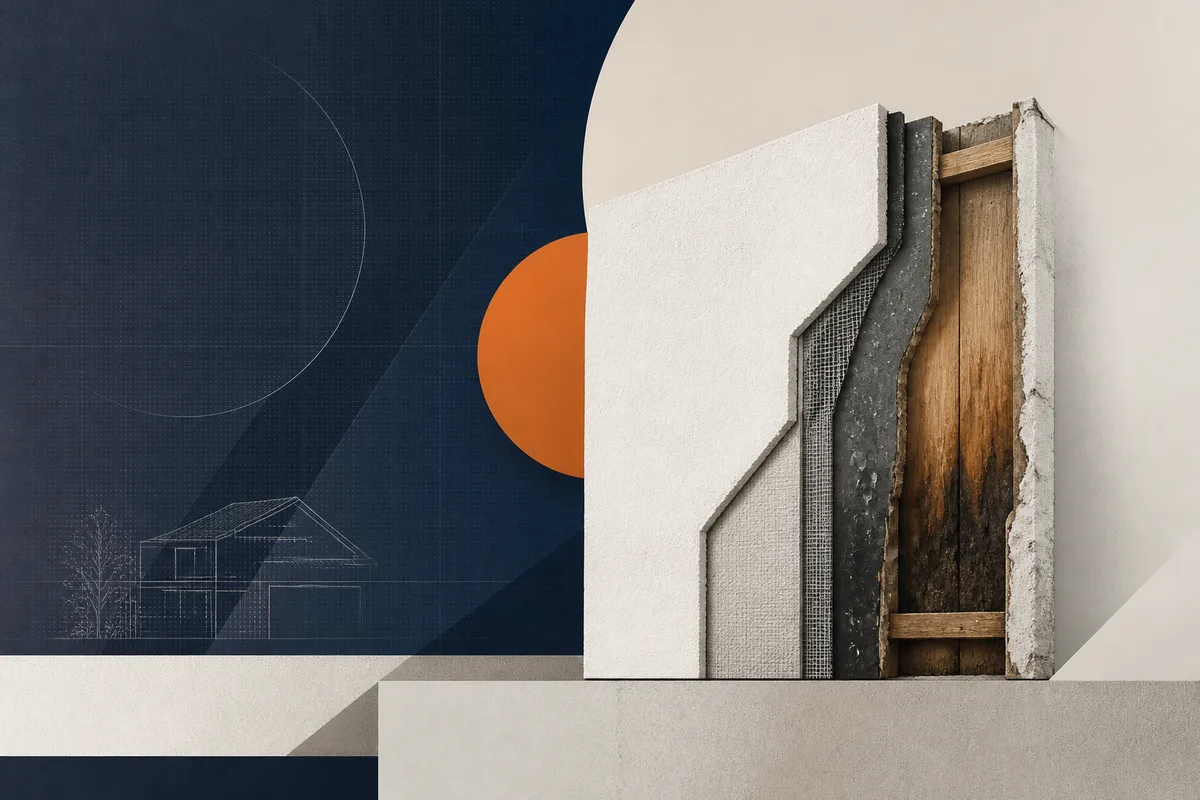
The Vapor Trap: Why Waterproofing Stucco Often Leads to Internal Rot
In an arid environment, property owners often mistake "waterproofing" for "protection." When a thick, rubberized elastomeric coating is applied to a desert home, it can create a non-breathable membrane over a naturally porous material. While this successfully keeps rain out, it can also lock internal moisture in, potentially rotting the structural substrate from the inside out.
This playbook breaks down the technical relationship between perm ratings and stucco longevity. It is intended for commercial facility managers and residential owners who are evaluating exterior finishes and want to avoid the long-term liability of trapped moisture in exterior walls.
Why "Waterproofing" Stucco Fails in Arid Climates
Traditional stucco is designed to be a reservoir system; it absorbs a small amount of moisture and releases it through evaporation. Applying a coating with low permeability disrupts this natural cycle.
- High-elasticity coatings act as a vapor barrier on the wrong side of the wall, preventing the outward migration of humidity.
- Diurnal temperature swings in the East Valley cause the air inside wall cavities to expand and contract, driving moisture toward the cooler surface.
- Once water vapor hits the back of a non-breathable coating, it condenses into liquid water that cannot evaporate.
- Prolonged moisture contact softens the gypsum sheathing and promotes fungal growth on wooden studs.
- Undetected leaks from windows or roof flashing become catastrophic because the water has no path to exit the assembly.
The Playbook for Breathable Exterior Walls
1Prioritize the Perm Rating
The permeability of stucco coatings is measured by "perms," which dictate how much water vapor can pass through a material. A truly effective coating blocks liquid water from penetrating the surface while staying breathable, so vapor can escape from inside the wall (https://www.stucoflex.com/blog/what-is-elastomeric-paint-a-technical-guide-for-contractors/). If a finish is too dense, it essentially shrink-wraps the building, leading to bubbling and peeling.
2Differentiate Elastomeric Coating vs Acrylic Finish
Elastomeric coatings are often marketed for their crack-bridging abilities, but their low permeability makes them risky for older homes with traditional lath systems. While some modern elastomeric coatings are vapor permeable, others form a much tighter film (https://www.homeshieldcoating.com/permanent-exterior-coating/elastomeric-paint-stucco-block/). Acrylic finishes generally offer better vapor permeable stucco finish characteristics. The choice should be dictated by the existing wall assembly and the presence of a functional drainage plane.
3Verify the Drainage Plane Integrity
A coating is only one part of a system that includes building paper or house wrap and a weep screed at the foundation. Proper water system design and site drainage are critical for preventing external water accumulation around the structure. If the internal drainage plane is compromised, even the most breathable finish cannot prevent water damage repair needs.
4Match the Finish to the Substrate
Newer EIFS (Exterior Insulation and Finish Systems) require specific synthetic finishes that are engineered to work with foam insulation. Applying a heavy, non-breathable paint over these systems can lead to blistering and peeling, particularly if walls have pre-existing moisture (https://pennacchiindustries.com/blog/elastomeric-coating). Always verify that the topcoat is chemically and mechanically compatible with the base coat and the underlying insulation.
The Mechanics of Vapor Diffusion
Vapor diffusion is the process by which moisture moves through solid materials. In a desert climate, the sun heats the exterior stucco, creating a pressure differential that pushes any moisture inside the wall toward the interior during the day. At night, the process reverses.
If the finish coat is "closed," the moisture remains trapped against the plywood or OSB sheathing. Over several seasons, this moisture facilitates the breakdown of the wood fibers. A breathable system ensures that even if a small amount of water enters through a stucco crack repair issue, the wall has the capacity to dry out before structural damage occurs.
A measure of the mass rate of water vapor transmission through a square unit of flat material; higher numbers indicate better breathability.
How Chandler Stucco Repair Evaluates Wall Health
Managing a property in the East Valley requires an understanding of how local heat affects building materials. A professional evaluation typically begins with a visual inspection for bubbling or blistering in the current paint, which are primary indicators of trapped vapor (https://www.linkedin.com/posts/mark-fowler-bb00a014_elastomeric-and-stucco-the-use-of-elastomeric-activity-7240373199480221697-tlee). When addressing moisture issues, a sound scope of work involves identifying the entry point of the water—often around windows or parapet walls—and determining if the current coating is contributing to the problem. Owners should expect a detailed plan that addresses both the aesthetic finish and the underlying structural integrity. For an on-site assessment, property owners can reach out at (480) 605-4474 or submit a request via the online portal.
Frequently asked questions
Can I use a high-gloss paint on my stucco home?
High-gloss paints generally have very low permeability and act similarly to dense elastomeric coatings. In the intense heat of the Maricopa County area, these coatings can trap moisture, leading to premature peeling and potential rot. Flat or matte finishes designed specifically for masonry are usually the safer choice for maintaining breathability.
How do I know if my stucco is currently "breathing"?
One common sign of a non-breathable wall is the presence of bubbles or blisters under the paint surface. If you see areas where the paint is peeling back to reveal damp, crumbling brown coat underneath, the wall is likely trapping moisture (https://www.homeshieldcoating.com/permanent-exterior-coating/elastomeric-paint-stucco-block/). A professional moisture meter test can confirm the levels of hydration behind the finish.
Is elastomeric ever the right choice?
Elastomeric coatings may be appropriate in specific applications where the building requires significant crack bridging. The permeability rate of quality elastomeric coatings creates a one-way moisture barrier that protects structures from both internal and external threats (https://www.highperformancecoatings.org/resources/all-elastomeric-wall-coatings-arent-equal). However, it is essential to consult the manufacturer's technical data sheets to compare perm ratings before application.
Will a breathable coating protect against heavy Arizona monsoons?
Yes, a high-quality acrylic finish with a high perm rating is designed to shed liquid water (bulk water) while still allowing vapor to escape. The goal is to prevent water from soaking into the wall during a storm while ensuring that any moisture that does get in can evaporate once the sun comes out.
What happens if I ignore bubbles in my stucco finish?
Ignoring bubbles or peeling usually leads to a much larger repair bill. Trapped water will eventually cause the metal lath to rust and expand, which cracks the stucco from the inside. In severe cases, the moisture will rot the wooden studs and sheathing, potentially compromising the structural safety of the building in Chandler or surrounding areas.
What happens when you get in touch: you describe the situation, we ask the few questions that actually change the answer, and you get a clear scope and next step — no obligation.