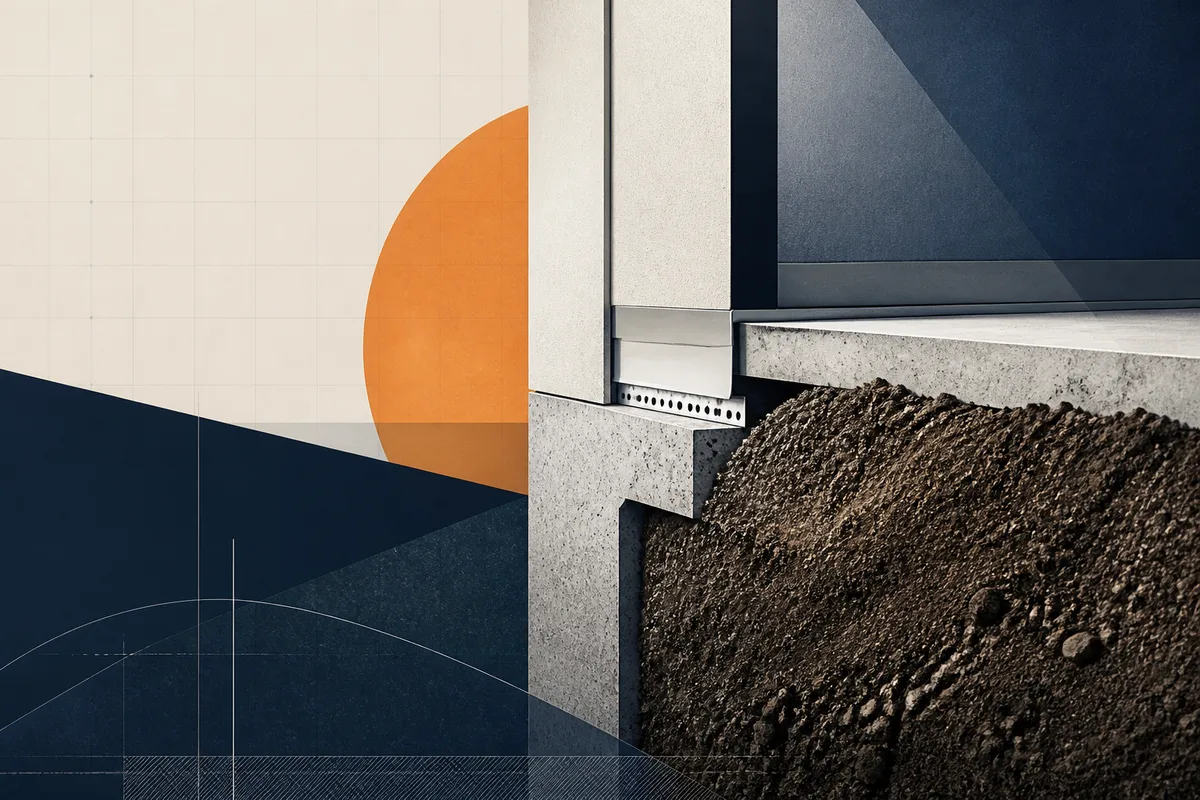
The Structural Cost of Buried Weep Screeds and Soil Contact
Stucco failures in the East Valley rarely begin in the middle of a wall. They start at the bottom, where the vertical surface meets the horizontal grade. When landscaping, mulch, or decorative stone is piled against the base of a home, it covers the weep screed—a critical metal flashing designed to let moisture escape the wall assembly. Once this drainage point is buried, the stucco acts like a sponge, pulling moisture upward into the framing through capillary action.
This technical guide explains the necessity of maintaining a proper stucco termite shield clearance to protect the structural integrity of a property. It is written for property managers and homeowners who need to diagnose why their exterior finishes are bubbling, cracking, or showing signs of pest intrusion at the foundation level.
Why Ground Clearance Failures Occur
The transition between the foundation and the wall is the most vulnerable point of any building. In many Chandler residential developments, original construction meets code, but subsequent "curb appeal" upgrades destroy the necessary clearances.
- Decorative planters and raised garden beds are often built directly against stucco walls, trapping moisture against the substrate.
- Termites utilize the moisture trapped behind buried stucco to build mud tubes, shielded from the dry Arizona air that would otherwise kill them.
- Excessive irrigation near the foundation saturates the soil, accelerating the breakdown of the paper backing or foam insulation behind the stucco.
- The lack of a visible foundation gap prevents inspectors from seeing the physical evidence of pest "shelter tubes" climbing the concrete.
The Framework for Foundation Clearance
Managing the intersection of soil and stucco requires a strict adherence to drainage physics. If the bottom of the wall cannot breathe, the interior of the wall will eventually rot.
1Identify the Weep Screed
The weep screed is the perforated metal strip located at the base of the stucco wall. Its primary function is to provide an exit point for water that has seeped behind the stucco skin. A clear screed ensures that the building envelope remains dry and prevents water damage repair needs caused by internal wood rot.
2Establish Minimum Earth Clearance
Industry standards generally require a specific distance between the bottom of the stucco and the finished grade. According to Pacific Northwest National Laboratory, maintaining this gap is essential for termite resistance. Forging termites are forced to build visible mud tubes over the foundation to reach the wood framing, making them easy to spot.
3Verify Termite Shield Integrity
A termite shield is a non-corrosive metal ribbon installed between the foundation and the sill plate. As noted by North Carolina State University, these barriers should ideally extend at least two inches out from the foundation to prevent foraging pests from reaching the framing. The shield does not always stop them entirely, but it forces them to emerge from behind the stucco.
4Correct Grade and Slope
The soil surrounding the foundation must slope away from the building to prevent ponding. When the ground is level or sloped toward the house, water accumulates at the base of the stucco, creating a constant "wet-dry" cycle that causes the finish to delaminate and flake away from the foundation.
The Mechanics of Stucco Separation
When stucco is applied correctly, there is a clear separation between the exterior finish and the soil. This is often referred to as the foundation "reveal." If this reveal is missing, the house is effectively sitting in a wet sleeve. Capillary rise can pull water several inches up into the wall, where it meets the wooden sole plate.
Mississippi State University Extension highlights that properly installed shields make infestations easier to detect. Without this separation, a homeowner may not realize they have a problem until the drywall inside the home begins to soften or discolor. In the arid climate of Maricopa County, this moisture also attracts pests seeking a water source, turning a minor drainage issue into a significant structural threat.
How Chandler Stucco Repair helps
Addressing foundation clearance issues typically involves a multi-step remediation process. A standard scope of work includes excavating soil away from the base of the wall to expose the weep screed, cleaning the metal to ensure the drainage holes are unobstructed, and repairing any damaged "brown coat" or finish coat that has been softened by constant moisture contact.
Property owners in the Chandler service area should ensure that any repairs comply with local safety and permit requirements. According to the City of Chandler, building safety inspections are a core part of maintaining property standards. If you suspect your landscaping has breached the weep screed line, you can reach the office at (480) 605-4474 or request an assessment via the online form at https://stuccorepairofchandler.com/.
Frequently asked questions
How much gap should there be between my stucco and the dirt?
Standard building practices usually require at least six inches of clearance between the earth and the bottom of the stucco. If the surface is a hardscape like a concrete patio, a two-inch gap is often acceptable. This ensures that splashing rain does not constantly saturate the weep screed and provides enough room for visual pest inspections.
Can I just paint over the stucco that is touching the ground to seal it?
No, painting over buried stucco often makes the problem worse by trapping moisture inside the wall. Stucco is a breathable material; sealing the exterior while the bottom is in contact with moist soil prevents the wall from drying out, which can lead to rapid wood rot and mold growth behind the finish.
Why does my stucco have metal mesh showing at the bottom?
That metal is likely the weep screed or the lath. If it is visible and clear of debris, it is performing its job. However, if the metal is heavily rusted or the holes are plugged with dirt or old paint, it needs to be cleaned or replaced to allow the wall to drain properly.
Do termite shields replace the need for chemical soil treatments?
No, termite shields are considered a physical deterrent and an inspection aid rather than a total solution. They are most effective when used in conjunction with other prevention methods. Their primary value is forcing termites to build mud tubes in visible areas rather than allowing them to enter the home unseen through the wall cavity.
Is it common for Chandler homes to have buried weep screeds?
Yes, it is very common in the East Valley due to the popularity of desert landscaping. Homeowners frequently add layers of granite or decorative rock over the years, slowly raising the ground level until the drainage plane is completely covered. Periodically removing excess material to reveal the foundation is a necessary maintenance task for Arizona properties.
What happens when you get in touch: you describe the situation, we ask the few questions that actually change the answer, and you get a clear scope and next step — no obligation.